Best trees to plant in your backyard, by climate
Airleaf field team · · 7 min read
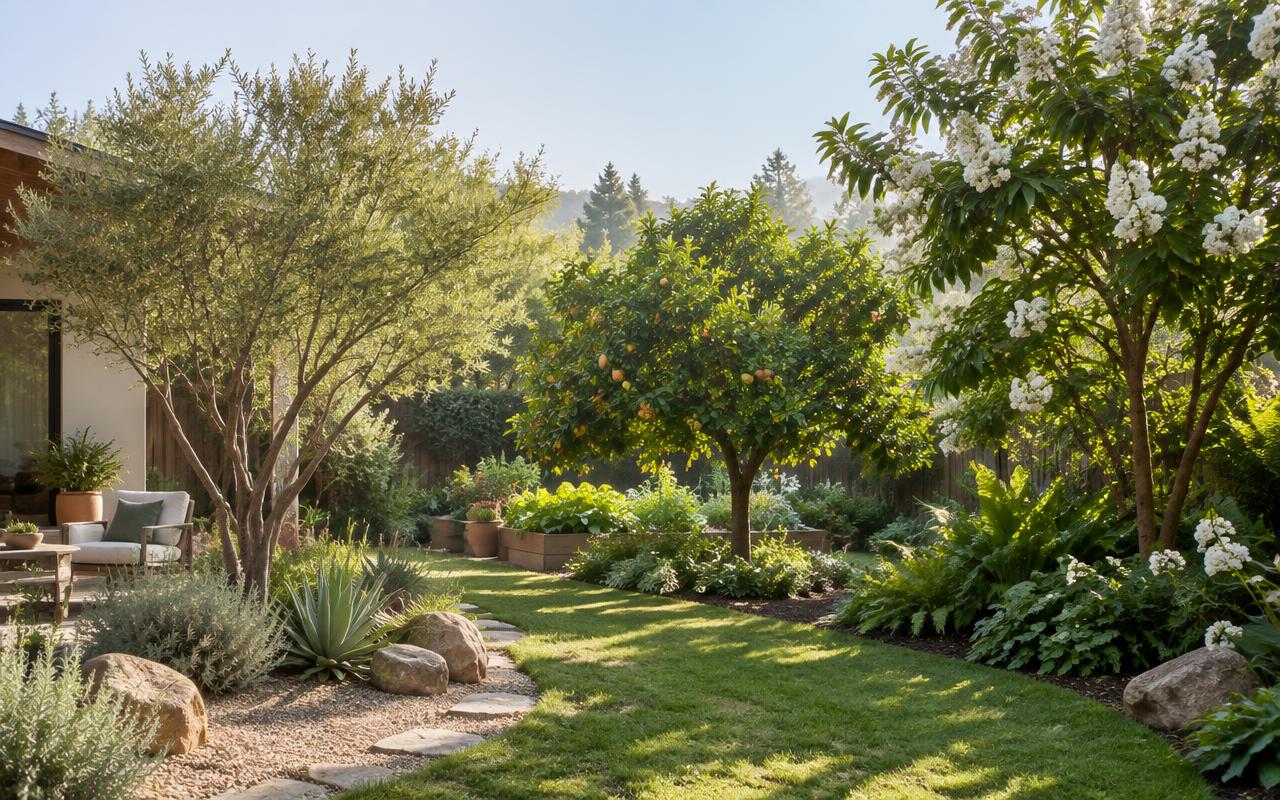
The single biggest reason backyard trees fail is not bad luck — it is planting a species suited to a different climate than the one it actually has to survive in. Climate should be the first filter, before shape, speed or how it looked at the nursery.
Cold and temperate climates
Think much of the northern US, Canada, and northern and central Europe — real winters, warm but not scorching summers. Native maples, oaks and birches are dependable choices: slow enough to be manageable, hardy through frost, and well studied for disease resistance in these regions.
Rowan (mountain ash) and serviceberry are good smaller options for tighter gardens, offering spring flowers and berries without the eventual scale of an oak.
Mild, maritime climates
The UK, Ireland, the Pacific Northwest and similar coastal-temperate regions get mild winters and cool, wet-leaning summers. Silver birch, hawthorn and crabapple all thrive here and tolerate the heavier, often clay-rich soils common in these regions better than drought-adapted species would.
Hot and dry climates
The US Southwest, inland Australia and similar arid regions need genuinely drought-adapted species, not just 'tough' ones. Native mesquite, desert willow and drought-hardy acacias are built for long dry stretches without supplemental watering once established — a non-native ornamental will simply need irrigation indefinitely.
Humid subtropical climates
The southeastern US, coastal Queensland and comparable regions get hot, humid summers and mild winters. Southern magnolia, crepe myrtle and native oaks suited to humid conditions handle the combination of heat and moisture that causes fungal problems in species bred for drier climates.
Before you plant anything
Climate is the first filter, but not the last one:
- Native beats ornamental almost every time — local wildlife, soil fungi and pollinators co-evolved with native species
- Check the tree's mature size against your actual space, not the size it is at the nursery
- Keep root systems well clear of foundations, drains and underground pipes
- A local extension service, arborist or native plant society can confirm exactly what thrives on your specific soil, which no general guide can do precisely
Put it into practice
See the canopy and air quality of your own street, then plant what it's missing.
Analyse my area →