The urban heat island effect: why cities run hotter than the countryside
Airleaf research team · · 6 min read
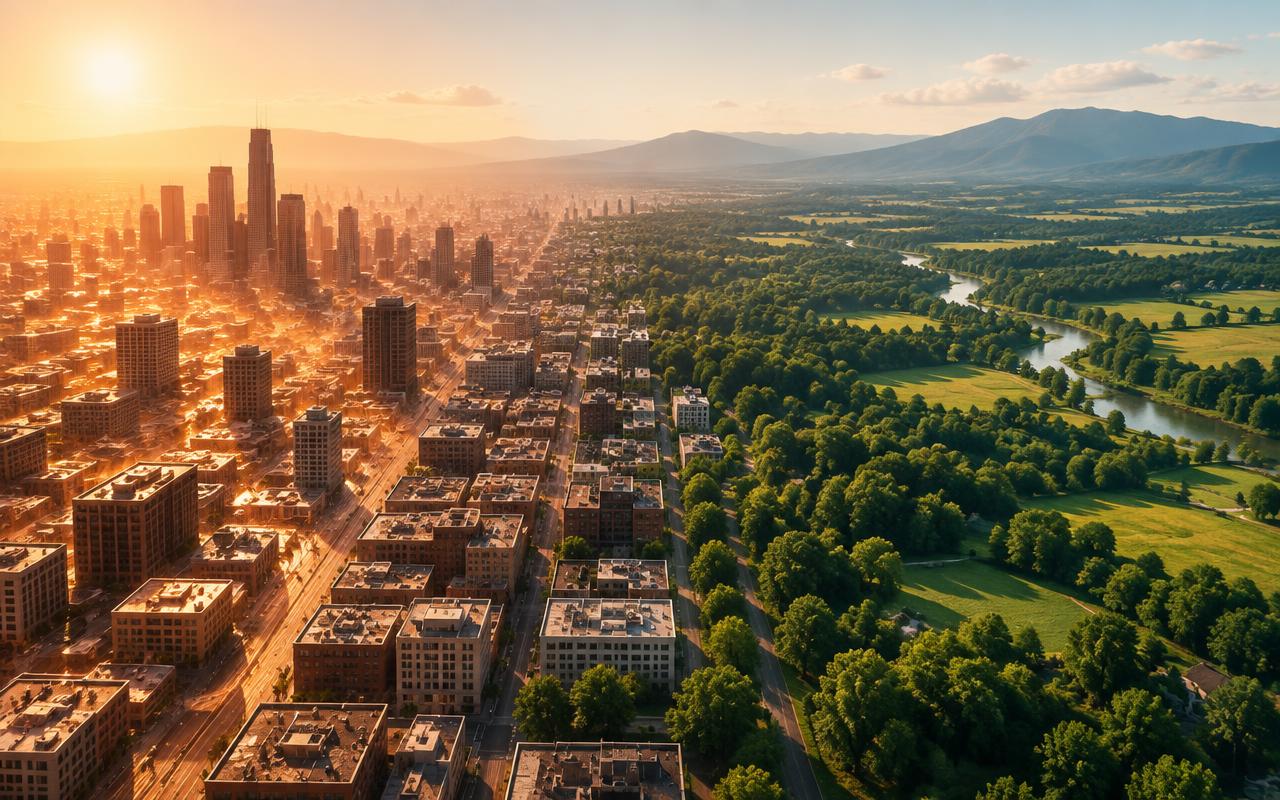
Step from a leafy suburb into a paved city centre on a summer afternoon and the temperature change is not your imagination. Cities generate and trap their own extra heat — a well-documented effect with a name, a cause, and a genuinely effective, low-tech fix.
How much hotter, really
The US EPA's commonly cited range puts urban areas at roughly 1–7°F (about 0.5–4°C) hotter than surrounding rural areas during the day, and the gap can widen to as much as 5–22°F (roughly 3–12°C) after dark, once concrete and asphalt release the heat they soaked up all day.
That night-time gap is the more dangerous one. It is exactly the recovery period bodies rely on during a heatwave, and it is the one most degraded by hard, dark surfaces.
Why it happens
Natural land cover — soil, vegetation, water — reflects some heat and dissipates the rest through evapotranspiration, plants releasing water vapour as they cool themselves. Replace that with dark asphalt and roofing and you get a surface that absorbs far more solar energy and radiates it back for hours.
Add waste heat from vehicles, air conditioning and industry, plus tall buildings that trap air and block cooling breezes, and a city effectively builds its own low-grade heat engine.
Where canopy actually helps
Trees fight this two ways at once: direct shade keeps pavement and buildings from absorbing solar heat in the first place, and evapotranspiration through their leaves cools the air directly — a mature tree can transpire enough water on a hot day to have a cooling effect roughly comparable to several residential air conditioners.
The effect is measurable at street level. Shaded streets in well-treed neighbourhoods routinely test several degrees cooler in summer than an unshaded street a few blocks away with identical building density.
What actually moves the needle
Canopy is the highest-leverage single fix, but it compounds with a few others:
- Tree canopy over streets and car parks, not just parks — parking lots are some of the hottest surfaces in any city
- Lighter-coloured, more reflective paving and roofing where trees are not practical
- Green or reflective roofs on flat-roofed buildings
- Protecting existing mature trees — a new sapling takes years to deliver the shade an established tree already provides
Put it into practice
See the canopy and air quality of your own street, then plant what it's missing.
Analyse my area →