How many trees does a city actually need?
Airleaf research team · · 7 min read
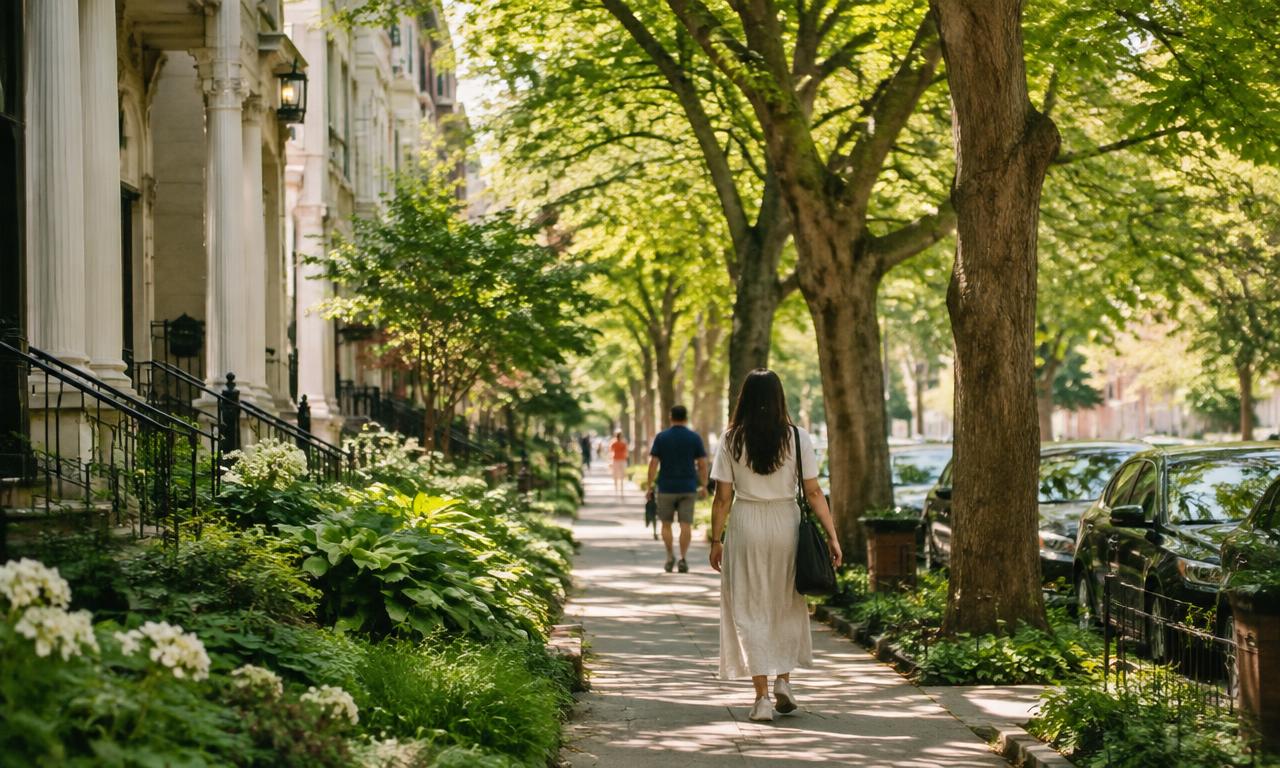
Ask ten councils how many trees a neighbourhood needs and you will get ten answers. The research, though, keeps landing near the same place: roughly a third of a residential area should sit under leaves.
The 3-30-300 rule
Forestry researcher Cecil Konijnendijk distilled decades of urban greening evidence into a rule that anyone can check from their own window: every home should see at least 3 trees, sit in a neighbourhood with at least 30% canopy cover, and be no more than 300 metres from a real green space.
It is deliberately blunt. The value is that it converts an abstract environmental goal into three things a resident, a planner and a funder can all verify on a map.
- 3 trees visible from every home — daily contact with greenery is what drives the mental-health benefit
- 30% canopy in every neighbourhood — the threshold where cooling and air-filtering effects become measurable
- 300 metres to a park — the distance beyond which people simply stop walking to green space
Why 30% and not 10%
Below roughly 20% cover, a street behaves thermally like bare concrete. Studies across dozens of cities find that dense canopy can hold summer afternoon air several degrees cooler than an unshaded street nearby, and surface temperatures far lower still.
The benefit curve is steep at first and then flattens. Going from 10% to 30% transforms a street. Going from 40% to 60% is pleasant but adds much less per tree — which is exactly why planting effort should be aimed at the emptiest areas first.
Turning percentages into a tree count
Airleaf does this conversion for the circle you draw on the map. It measures the greenery actually visible in that circle, compares it with the 30% target, and converts the missing area into whole trees using an average mature crown.
A medium urban tree covers something like 30 to 50 square metres of ground once grown. So a one-square-kilometre neighbourhood sitting at 12% cover is missing about 180,000 square metres of canopy — on the order of four to six thousand trees, planted over years, not weekends.
What the number is good for
Treat it as a planning figure, not a promise. Real planting is limited by footpath width, underground services, water availability and who will care for the tree in year three. The number's job is to make the gap visible and fundable.
Put it into practice
See the canopy and air quality of your own street, then plant what it's missing.
Analyse my area →