How to plant a tree that is still alive in five years
Airleaf field team · · 8 min read
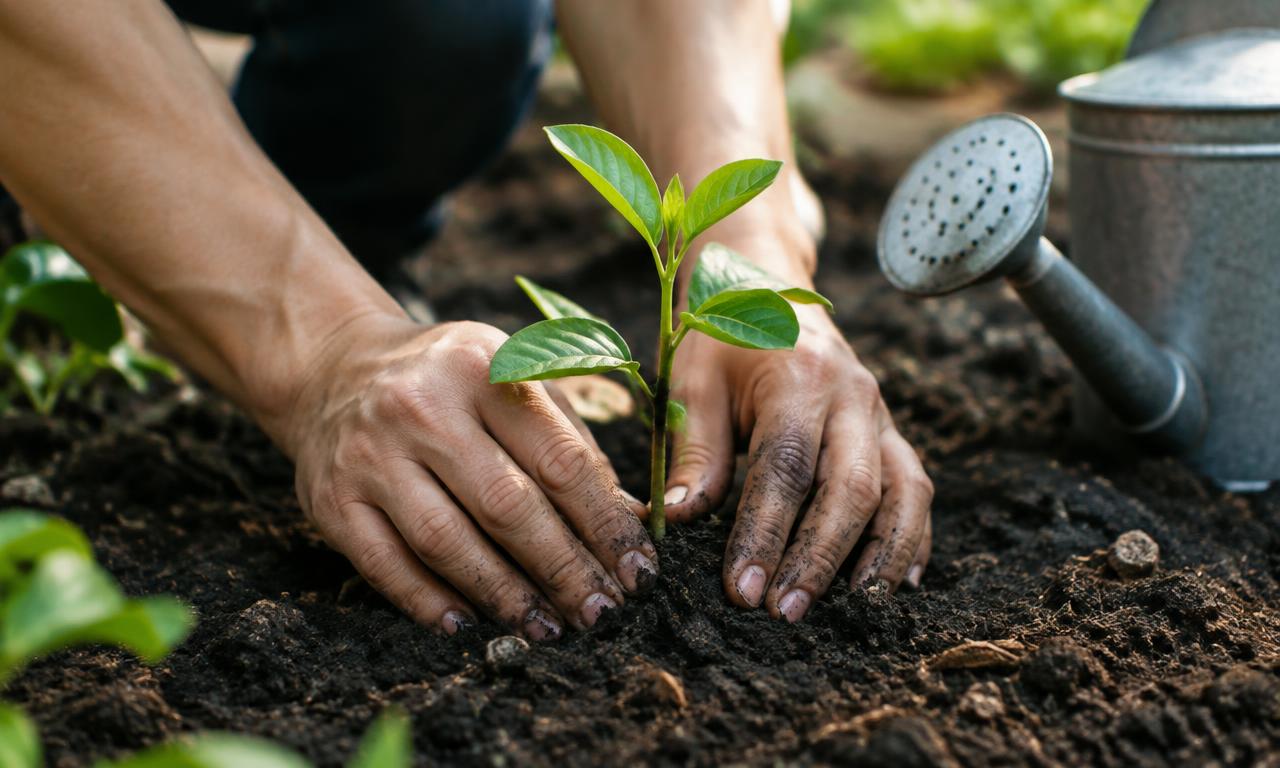
Planting drives get the photographs; survival rates get the results. Across large campaigns, losses in the first two years are routinely severe — and nearly all of it comes down to four decisions made on planting day and the watering that follows.
1. Choose species for the site, not the season
Match the tree to the soil, the water it will actually receive and the space above and below ground. Native and locally adapted species survive dry spells that imported ornamentals will not.
In Pakistan's plains, neem, arjun, jamun, siris and sukh chain are dependable street trees. Avoid fast, brittle species near buildings and power lines — they grow quickly and fail expensively.
2. Dig wide, not deep
The pit should be two to three times the width of the root ball and no deeper than its height. Roots spread sideways; a deep pit lets the tree settle and buries the root flare, which slowly strangles it.
Break up the pit walls so roots can escape into the surrounding soil instead of circling inside a smooth-sided hole.
3. Set the depth precisely
The point where the trunk widens into roots must sit level with the surrounding ground. Planting a few centimetres too deep is the single most common fatal mistake.
Backfill with the original soil, firm it gently to remove air pockets, and build a shallow watering basin around the edge.
4. Mulch, stake lightly, then water on schedule
Spread 5–8 cm of mulch over the basin but keep it clear of the trunk. Mulch holds moisture, suppresses weeds and keeps the soil cool.
Stake only in wind-exposed spots, loosely, and remove the stake within a year — a trunk that sways builds strength.
- Weeks 1–8: deep water twice a week
- Months 3–12: weekly in dry weather, skip after real rain
- Year 2: fortnightly through the hot season
- Year 3 onwards: most well-chosen species are self-sufficient
Put it into practice
See the canopy and air quality of your own street, then plant what it's missing.
Analyse my area →